One of the biggest questions I hear from couples is: “How much time do we really need for photos on our wedding day?” And honestly? It’s such a good question. A well-planned wedding photography timeline doesn’t just make your photos look beautiful — it makes your entire day feel calmer, more intentional, and way more enjoyable.
As an Austin wedding photographer, I’ve photographed weddings in every setting imaginable — Hill Country vineyards, downtown rooftops, backyard celebrations, and dreamy outdoor venues under the Texas sun. No matter the location or guest count, the same thing always holds true: a thoughtful timeline is everything to get the best pictures.
So here are my top wedding photography timeline tips to help you soak in every moment while still getting the romantic and real photos you’re dreaming of!

Start with What Matters Most to You
Before we talk minutes and logistics, let’s talk about your priorities. Do you care most about private couple portraits? More candid time with guests? A relaxed morning without rushing? There’s no one-size-fits-all timeline — the best wedding days are built around what matters to you.
This is something I walk through with every couple. Once I understand your vision, I work with you (and your planner!) to build a wedding photography timeline that protects those moments.
Getting Ready: Give Yourself Breathing Room
I always recommend allowing at least 30-45 minutes for getting-ready photos and 30-45 minutes for wedding detail photos. This gives us time to capture details (your dress, rings, invitation suite), candid moments with your people, and those sweet in-between emotions without feeling rushed.
Pro tip: Try to be fully dressed about 30 minutes before you plan to leave for the ceremony or first look. This buffer is a game changer and keeps stress levels low.

Consider Doing a First Look
I know first looks can be a big decision, but from a photography and experience standpoint, they can be amazing. A first look gives you:
- More time for couple portraits
- A private moment together
- A more relaxed post-ceremony timeline
- The ability to attend cocktail hour together
If you choose to do a first look, I recommend setting aside 20–30 minutes for that moment, plus additional time for portraits right after. It often becomes one of the most emotional and memorable parts of the day.

Couple Portraits
We can’t forget to add in time for photos of you as a newlywedded couple!
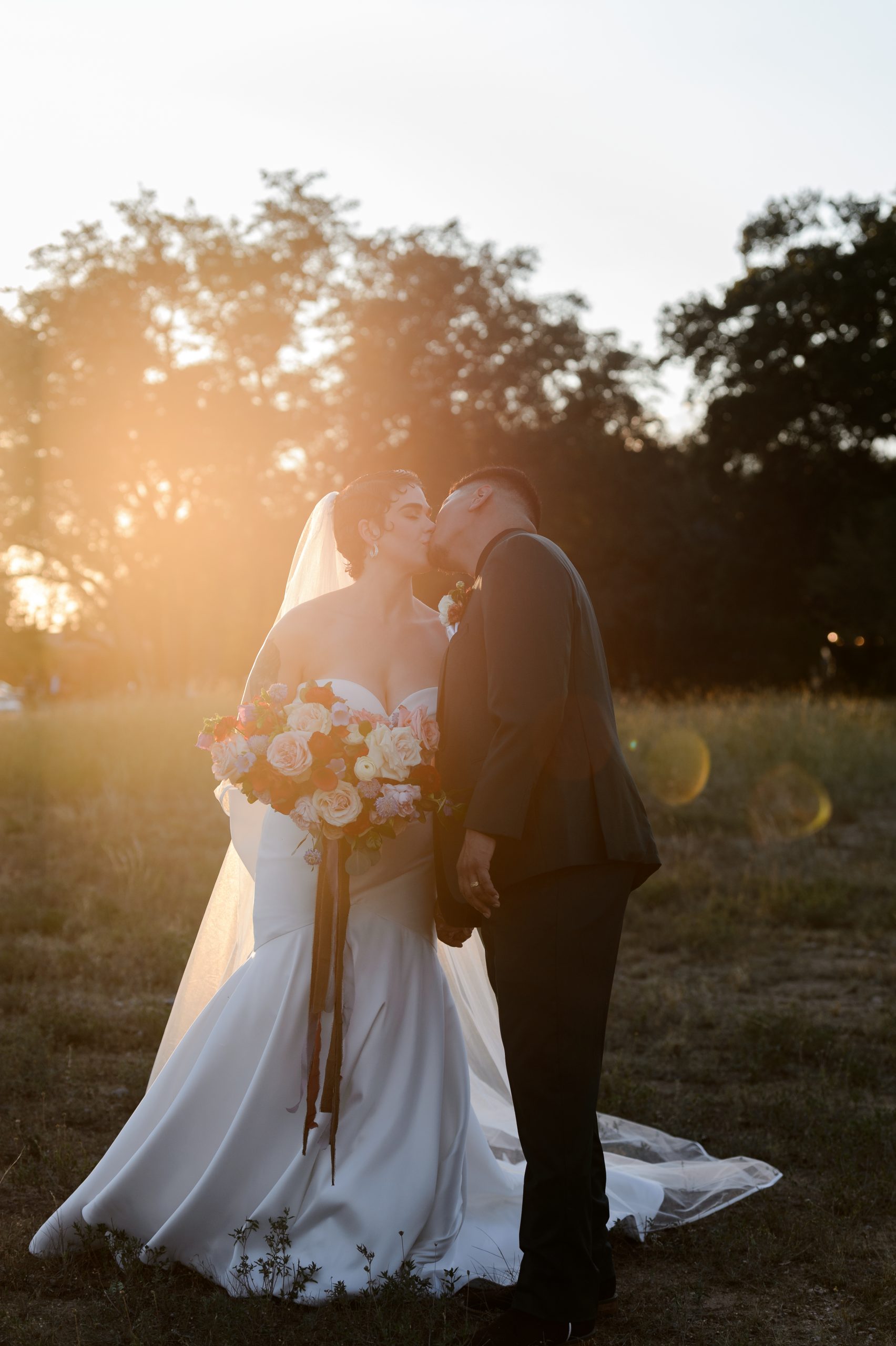
As a photographer, I like to include two different couple portrait sessions, both about 15 minutes. One either after the first look (if you decide to do a first look) or directly after the ceremony and then one during golden hour.
If sunset photos are important to you (and trust me — they’re always worth it), we’ll plan to sneak away for 15-20 minutes around golden hour. You won’t miss much at your reception, and the photos will feel soft, romantic, and glowing.
Ceremony Timing and Light Matters
If you’re getting married in Austin, the light is beautiful… but it’s also intense. If you’re having an outdoor ceremony in Austin or other similar places, timing is everything. Midday sun can be harsh, especially in the warmer months, so later afternoon ceremonies are often more flattering and comfortable.
Keep Family Photos Efficient
Family photos don’t have to take forever — they just need a plan. I recommend setting aside at least 20–30 minutes, depending on the size of your family, and providing a short, organized list of groupings ahead of time.
Another pro tip? Assign a family member on each side who knows everyone and can help gather people quickly. This keeps things moving smoothly and gets you back to celebrating faster.

Wedding Party Photos: Fun, Not Forced
Wedding party photos should feel joyful, not stiff or stressful. I usually recommend at least 30 minutes for these — enough time for classic group photos and some fun, candid moments that actually reflect your relationships.
If you’re doing these before the ceremony, it helps keep the rest of the day flowing seamlessly and helps your bridal party to relax and loosen up a bit more.
Build in Transition Time (It’s Definitely Necessary)
One of the most overlooked parts of a wedding timeline is transition time — moving from one location to another, bustling guests, outfit changes, or simply catching your breath. You can also build in some time for you and your new spouse to take a few moments together to relax and enjoy some time alone away from the business of the wedding day.
I always build in buffers because things naturally take a little longer than expected. And when you’re not rushed, your photos (and your experience) benefit so much.

Trust Your Photographer (That’s Me!)
My biggest piece of advice? You don’t have to figure this out alone. Part of my job as a photographer is helping you create a wedding photography timeline that feels realistic, relaxed, and aligned with your vision.
I collaborate closely with your planner, keep an eye on the light, and adjust as needed throughout the day — so you can stay present and actually enjoy your wedding.
It usually makes the most sense for your photographer to eat when you eat so we don’t miss any crucial moments during the reception, like toasts or the cake cutting. And no one wants pictures of their mouths full of food anyway!
Planning Your Timeline
The best wedding photography timelines leave room for what matters most: connection, joy, and being fully in the moment. When your timeline supports you, everything else falls into place — including photos that feel natural, emotional, and completely true to your story.
If you’re planning a wedding in Austin and want help building a timeline that feels effortless and intentional, I’d love to walk through it with you. Because your wedding day deserves to feel just as beautiful as it looks. Get in touch to chat about your wedding day!